"If you take a bus to Port-au-Prince, make sure your ride is there to pick you up right when you get off. Better yet, don't get out of the bus until you can actually see your ride, and make sure you have to walk no more than ten yards to get there. When I [finally] saw [my friend's] car through the traffic, it was as if the clouds had parted and a ray of sunshine directly from God was shining down upon me," a friend wrote to me the other day about his bus trip from Les Cayes to Port-au-Prince. Though overjoyed to hear he was unharmed, I must say I was not surprised at his tale. My word to the wise always is, "unless you are Haitian, don't get on the bus in the first place."
Despite the fact that things really are better in Haiti these days, my friend's bus trip confirms that safety still has a lot to do with circumstances. In late Spring of 2007, a boat of westerners sailed into the waters of southern Haiti - coming into Les Cayes to fuel and gear up. They found the island fascinating and, not having planned to do so and unfamiliar with the country, decided to spend a little time visiting around the coast. The next evening, while anchored off another coastal town in the southern department, they were attacked. A mob of Haitians had cut their line, and were walking and boating across the sandbars and shallow harbor with torches chanting for money. The small group of sailors, who were too far for any timely rescue, managed to escape - but only just.
The near misses are not reported. That my Creole-speaking American friend got "scared for the first time" in Haiti will not be in a U.N. report. That a boat of westerners almost did not make it is certainly not evening news. But these anecdotes are important because they reveal a continued state of volatility in Haiti. Travelers should feel more comfortable about the kidnapping situation (or relative lack there of) and a safer capital city, but they should still heed travel warnings to stay away from potential mob scenes, avoid public transportation (or tap-taps, as they are called), etc. etc.
I have decided to take up blogging again (for several reasons) and begin with this topic because lately I have received several emails from people traveling to Haiti and their primary concern is usually security. These people are finding me through expat directories and Google searches for Haiti. Thus, let this entry show that 1) I still stay up on what's going on down there, 2) I am more than happy to share my opinions, 3) I am going to start sharing them more regularly here!
Showing posts with label travel. Show all posts
Showing posts with label travel. Show all posts
Monday, January 14, 2008


Tuesday, October 09, 2007
the travel Bildungsroman
Eat Pray Love and The Sex Lives of Cannibals have three things in common: they are books, they are topsellers and they are about travel. The two are not, however, both good. In an effort to see what folks are buying, reading and liking travel-log-wise, I read both.
Elizabeth Gilbert, author of Eat Pray Love, does a fantastic job of exploring her emotional progress in various exotic settings. I began to drool while reading her descriptions of Neapolitan pizza and had fleeting fantasies about visiting Bali but overall learned very little about the people and places she encountered on her travels -- especially in India where she spends 99% of her time in an Ashram. Gilbert's true journey is not through the physical locations that create the setting for the novel but through her psyche. While the latter is a somewhat interesting as an exercise in introspection, it falls a bit short of satisfactory for the readers looking to read about exotic places and their inhabitants. One has the impression that one is reading the author's most intimate journal entries (especially during the encounters with her Brazillian paramour) -- so if you're into that, pick up the book, read and enjoy.
In The Sex Lives of Cannibals, Mr. J. Maarten Troost uses his odd-ball perspective, daily mishaps and victories to create an interesting picture of the folk of the nation of Kiribati (pronounced KEER-I-BAS, he will remind you several times). His sense of humor leaks through every page such that I often found myself laughing out loud (in public) as I read. Thankfully, he saves any self-psychoanalysis about his behavior, decisions and love life from the pages of his novel. The reader is therefore able to enjoy his adventures and get a sense for what it might be like to actually live in an isolated, Pacific, nation. This novel is a travel bildungsroman: we learn in the end that the shiftless youth has, in fact, grown into a man but he allows the reader to infer this through action -- there is little telling and much showing. And, too, we get a sense of who the I-Kiribati (kind hosts to this young man during some years of maturation) really are.
After reading these works, I must conclude that Ms. Conlin and Mr. Zimmand, two teachers that shaped my writing through an insistence upon the use of active verbs rather than the passive voice, terse and pithy prose, and passages that "show" rather than "tell" (SORRY for this sentence), were absolutely correct! I also concluded that should this blog, my journal and daily emails ever coalesce to form a creative work suitable for publication and public consumption, it should be more Troostian than Gilbert-esque.
I do hope Troost writes again to reveal to readers more crazy things in this world that we may or may not ever have the chance to see ourselves. Good author.
Elizabeth Gilbert, author of Eat Pray Love, does a fantastic job of exploring her emotional progress in various exotic settings. I began to drool while reading her descriptions of Neapolitan pizza and had fleeting fantasies about visiting Bali but overall learned very little about the people and places she encountered on her travels -- especially in India where she spends 99% of her time in an Ashram. Gilbert's true journey is not through the physical locations that create the setting for the novel but through her psyche. While the latter is a somewhat interesting as an exercise in introspection, it falls a bit short of satisfactory for the readers looking to read about exotic places and their inhabitants. One has the impression that one is reading the author's most intimate journal entries (especially during the encounters with her Brazillian paramour) -- so if you're into that, pick up the book, read and enjoy.
In The Sex Lives of Cannibals, Mr. J. Maarten Troost uses his odd-ball perspective, daily mishaps and victories to create an interesting picture of the folk of the nation of Kiribati (pronounced KEER-I-BAS, he will remind you several times). His sense of humor leaks through every page such that I often found myself laughing out loud (in public) as I read. Thankfully, he saves any self-psychoanalysis about his behavior, decisions and love life from the pages of his novel. The reader is therefore able to enjoy his adventures and get a sense for what it might be like to actually live in an isolated, Pacific, nation. This novel is a travel bildungsroman: we learn in the end that the shiftless youth has, in fact, grown into a man but he allows the reader to infer this through action -- there is little telling and much showing. And, too, we get a sense of who the I-Kiribati (kind hosts to this young man during some years of maturation) really are.
After reading these works, I must conclude that Ms. Conlin and Mr. Zimmand, two teachers that shaped my writing through an insistence upon the use of active verbs rather than the passive voice, terse and pithy prose, and passages that "show" rather than "tell" (SORRY for this sentence), were absolutely correct! I also concluded that should this blog, my journal and daily emails ever coalesce to form a creative work suitable for publication and public consumption, it should be more Troostian than Gilbert-esque.
I do hope Troost writes again to reveal to readers more crazy things in this world that we may or may not ever have the chance to see ourselves. Good author.
Wednesday, September 12, 2007
embracing my inner newcomer
Sometimes it takes a little extra push to engage one's "hometown" like a newcomer. The transients, expatriates, exchange students, etc. often take more energetic and aggressive attitudes toward meeting people, visiting places, seeing attractions and generally enjoying the town. In every major metropolitan area, there are publications, lists, books, sites and newspaper sections dedicated to highlighting the good stuff to do in town. Now that I am back in Washington DC (if for only for a year or two), I feel as though I must learn to engage the city of my birth like a spunky, native mid-westerner might -- embrace my inner newcomer, if you will.
In an effort to effect the latter, I called a college buddy, and incidentally a Washington transplant, to discuss/complain about my semi-self-imposed isolation in Chevy Chase. When I left for Haiti over eight months ago, I had friends and relatives who just moved down to the area in the last year. They were getting their bearings still when I left. Upon my return, I find them completely entrenched in all things Washington. And truthfully, I feel more admiration than surprise because I can easily see how this is analogous to building communities and friendships in Wells, England, Granada, Spain, and Les Cayes, Haiti, which I did without so much as a thought.
Though I am in the midst of applying for jobs, masters programs and hunting down a new place to live, there is no reason why I should not attend thematic happy hours, clubs, lunches, joining an association or two and maybe even (eep!) joining a kickball league... right? So... how to emulate those rose-colored shades and see my dear old friend, the capital of our great nation, as a recent transplant might?
Last night I joined a hill-staffer friend for dinner in Chinatown. We picked a bustling place -- one reviewed in a new, swanky Washington magazine as having excellent food. We were not spotted nor did we do much "spotting" but it felt like we were "somewhere," which is a start I think. Next I joined one of those "transplant" friends I mentioned at a thematic happy hour in Dupont. I had called him earlier and laughingly begged him to "reintroduce" me to my hometown. He did literally that -- presenting me to a wide array of his libertarian friends, many of whom write influential blogs and columns for local and national media engines and have a lot to say about national policy... how Washington.
One would think that it would be easier to assert oneself into an American community rather than a foreign community where language and many other things present constant barriers. Strangely, I feel more at home confronting those (usually artificially) boundaries as a transplant, no matter where, than I do learning to relearn my hometown. This time, though, I have decided to take it on as a challenge.
Watch out Washington, Portia's back!
In an effort to effect the latter, I called a college buddy, and incidentally a Washington transplant, to discuss/complain about my semi-self-imposed isolation in Chevy Chase. When I left for Haiti over eight months ago, I had friends and relatives who just moved down to the area in the last year. They were getting their bearings still when I left. Upon my return, I find them completely entrenched in all things Washington. And truthfully, I feel more admiration than surprise because I can easily see how this is analogous to building communities and friendships in Wells, England, Granada, Spain, and Les Cayes, Haiti, which I did without so much as a thought.
Though I am in the midst of applying for jobs, masters programs and hunting down a new place to live, there is no reason why I should not attend thematic happy hours, clubs, lunches, joining an association or two and maybe even (eep!) joining a kickball league... right? So... how to emulate those rose-colored shades and see my dear old friend, the capital of our great nation, as a recent transplant might?
Last night I joined a hill-staffer friend for dinner in Chinatown. We picked a bustling place -- one reviewed in a new, swanky Washington magazine as having excellent food. We were not spotted nor did we do much "spotting" but it felt like we were "somewhere," which is a start I think. Next I joined one of those "transplant" friends I mentioned at a thematic happy hour in Dupont. I had called him earlier and laughingly begged him to "reintroduce" me to my hometown. He did literally that -- presenting me to a wide array of his libertarian friends, many of whom write influential blogs and columns for local and national media engines and have a lot to say about national policy... how Washington.
One would think that it would be easier to assert oneself into an American community rather than a foreign community where language and many other things present constant barriers. Strangely, I feel more at home confronting those (usually artificially) boundaries as a transplant, no matter where, than I do learning to relearn my hometown. This time, though, I have decided to take it on as a challenge.
Watch out Washington, Portia's back!
Monday, June 11, 2007
a brief (if vapid) interlude
"Inside the Frame" intends to shed a spotlight on and provide the occasional snap-shot of life in the region of the world where I experience it. This Friday I'll be back in Haiti and posting and observing from there. For the moment, however, I am in the United States of America. Some of my behavior and choices may seem superficial to the less-than-dedicated reader, but they serve to lend a stark contrast to my everyday life in the Les Cayes area. Forgive me if I offend.
 California sunset
So pardon my long absence from the blog-o-sphere. It's not like interesting or remarkable things stop happening the second I land on U.S. soil. On the contrary.
The New York City bars, several weeks ago, were quite a trip (skinny drunk girls in $500 dresses, long flat hair swinging as they rocked to the rap music) after a 7 hour lay-over in the Port-au-Prince airport. In fact, now having traveled a bit more (but no where near as much as this guy), I agree that "Airports themselves are unexceptionally unexacting, unhappy, unsanitary, unpleasant places of waiting." Toussaint Louverture International is no different.
Unfortunately, I spent my first week back in the States battling a mean little Haitian germ. I guess it stowed away somewhere in my GI track for a while and reared its ugly head only when my immune system was debilitated from travel and irregularly late nights. This episode over-lapped with my eldest little brother's (take a minute to figure it out) graduation from Cornell. So instead of romping around campus and reliving the glory days, I lay in a hospital bed clutching my stomach and moaning in agony. I didn't even get to see Soledad speak. :-(
After New York City and Ithaca, I got to hang out in the Washington-Baltimore area for a few days where I marveled at my friend's close relationship with her huge Bengali-Tiger cat named "Baby Cat" (below). Baby-Cat is 4 times the size of my sweet little Teelees and I think they're the same age.
 TileesTheir markings are strangely similar despite obvious physical and temperamental differences. They both like to stalk though.
Then came a California voyage. I landed in Oakland, rented the ritziest SUV in the Enterprise lot, and drove south to Santa Cruz. In retrospect, I should have noted the warning label on the sun visor: "high roll-over risk. Avoid fast maneuvers and high speeds" given that a majority of my drive down the peninsula was on winding mountain roads. The purpose of my voyage? A wedding. Yes, the first of my good friends took the dive. It was a "do-it-yourself" wedding. All those present for the entire weekend stayed in cabins nestled in the redwoods.
  This select, cabin-bunking crowd, who participated in the bachelor/bachelorette parties, rehearsal dinners and Capitola Beach lunches, chipped in by flower arranging, giving facials, running errands and cooking late-night batches of macaroni.
I returned late last Monday to the District of Columbia with bright pink, California-esque nail polish on my toes and fingers. The Washington, DC area is so boringly conservative at times. At my regular DC-area spa, a manicurist looked down at my vibrant nails with a disapproving frown and said "ve-dy Cal-ee-fo-rrrr-nia."
Sound superficial yet? I even exchanged Brothers Karamazov for The Debutante Divorcée during my stay on the Left Coast. It was a delightfully vapid read.
Since returning to the capital area, I have made it my business to do all the things that are so very Washington: Drinks on the Georgetown waterfront, Latin dancing at Citrón and Rhumba, over-priced dinners comprised of "tasters" and tapas, shopping in Friendship Heights, trips to the Baltimore waterfront, backyard barbecues, and downtown lunches with folks of stature.
On the 14th, I head back to Haiti. Not sure if I am ready yet, but here I go! There are some cool projects coming up and I'll be doing most of the photography for Espwa now that Nick has left, so keep reading for more pics and more on the happenings of this volunteer in le Departement du Sud.
I am looking forward to a hot, sweaty summer in the Caribbean and to you living it vicariously through me via the blog.
 California sunset
The New York City bars, several weeks ago, were quite a trip (skinny drunk girls in $500 dresses, long flat hair swinging as they rocked to the rap music) after a 7 hour lay-over in the Port-au-Prince airport. In fact, now having traveled a bit more (but no where near as much as this guy), I agree that "Airports themselves are unexceptionally unexacting, unhappy, unsanitary, unpleasant places of waiting." Toussaint Louverture International is no different.
Unfortunately, I spent my first week back in the States battling a mean little Haitian germ. I guess it stowed away somewhere in my GI track for a while and reared its ugly head only when my immune system was debilitated from travel and irregularly late nights. This episode over-lapped with my eldest little brother's (take a minute to figure it out) graduation from Cornell. So instead of romping around campus and reliving the glory days, I lay in a hospital bed clutching my stomach and moaning in agony. I didn't even get to see Soledad speak. :-(
After New York City and Ithaca, I got to hang out in the Washington-Baltimore area for a few days where I marveled at my friend's close relationship with her huge Bengali-Tiger cat named "Baby Cat" (below). Baby-Cat is 4 times the size of my sweet little Teelees and I think they're the same age.

 Tilees
Then came a California voyage. I landed in Oakland, rented the ritziest SUV in the Enterprise lot, and drove south to Santa Cruz. In retrospect, I should have noted the warning label on the sun visor: "high roll-over risk. Avoid fast maneuvers and high speeds" given that a majority of my drive down the peninsula was on winding mountain roads. The purpose of my voyage? A wedding. Yes, the first of my good friends took the dive.
 It was a "do-it-yourself" wedding. All those present for the entire weekend stayed in cabins nestled in the redwoods.
  This select, cabin-bunking crowd, who participated in the bachelor/bachelorette parties, rehearsal dinners and Capitola Beach lunches, chipped in by flower arranging, giving facials, running errands and cooking late-night batches of macaroni.
I returned late last Monday to the District of Columbia with bright pink, California-esque nail polish on my toes and fingers.
 The Washington, DC area is so boringly conservative at times. At my regular DC-area spa, a manicurist looked down at my vibrant nails with a disapproving frown and said "ve-dy Cal-ee-fo-rrrr-nia."
Sound superficial yet? I even exchanged Brothers Karamazov for The Debutante Divorcée during my stay on the Left Coast. It was a delightfully vapid read.
Since returning to the capital area, I have made it my business to do all the things that are so very Washington: Drinks on the Georgetown waterfront, Latin dancing at Citrón and Rhumba, over-priced dinners comprised of "tasters" and tapas, shopping in Friendship Heights, trips to the Baltimore waterfront, backyard barbecues, and downtown lunches with folks of stature.
On the 14th, I head back to Haiti. Not sure if I am ready yet, but here I go! There are some cool projects coming up and I'll be doing most of the photography for Espwa now that Nick has left, so keep reading for more pics and more on the happenings of this volunteer in le Departement du Sud.
I am looking forward to a hot, sweaty summer in the Caribbean and to you living it vicariously through me via the blog.
Thursday, February 01, 2007
by the grace of God I live
Last Sunday after lunch, my friend Nick and I took a 40 min journey to the beach at Port Salut, Haiti for a little R&R. We enjoyed the sun and the warm Caribbean Sea and left to go home just before the sun sunk below the mountains. We made it through the mountain passes and the views were breathtaking. From time to time, we chatted over the sound of loud wind blowing past our ears as the motorcycle sped on. On the road below the mountains, as we neared Les Cayes and home, we passed a few small towns where people hung out by the side of the roads watching cock fights and celebrating saints days.
On a long straightaway we saw another motorcyclist pull out slowly on the right. Another man ran to catch up to the slow moving vehicle and tried to hop on the back. The rest happened instantaneously: Nick moved to the left of the road to avoid the slower bike. The slower bike popped a wheely and lost control, veering further and further left. Suddenly, impact.
The noise was metal clashing together and human bodies hitting the ground with force. I remember falling and feeling my head bounce twice as Nick and our bike fell on top of me and the other bike skidded over us and into the ditch. Nick peeled himself off the pavement and pulled the bike off me. I reached for my helmet and frantically tugged it off my head. Nick helped me up and I felt an incredible pain shoot through my whole body. Once we dragged ourselves to the side of the road I lay down and Nick played crowd control while simultaneously trying to call everyone we knew for help. After 30 minutes, some of our friends showed up.
At the first hospital we went to, Haitians lay dying on every bed in the ER and crowds hovered near the entrances. A Cuban doctor felt my body to make sure nothing was broken, glanced at the road burns and cuts covering my legs and arms, asked how I felt. When I rather shrieked that I couldn't see or hear and I was going to throw up, he ordered some drugs be brought from the dispensary and told me to lie down.
A large, frazzled nurse sutured Nick's elbow in the doorframe of the entrance while 40 passersby looked on. A doctor guided me to a hallway by the records room and instructed me to lie down on a dirty, dusty plastic mat, "it's the best we can offer." I set my head on a friends lap and a few moments later, a mouse scuttled past my toes. When I shrieked, a few on-looking women giggled. The man standing outside gazing in at me through the glass door smiled.
After a half hour or more, my friends returned from the dispensary with a syringe, painkiller and an IV. As soon as the nurse had administered the shot and hooked up the IV, I begged my friends to take me out of there. One grabbed me my under my "good" arm, another grabbed the drip bag; nurse “Ratchet” wasn't going to get another rough go at scraping my wounds clean.
 Alex, Nick’s roommate, works for the UN and is a trained EMT. He did his best to clean my wounds when we got home. The IV drip ran out, I took some oxycodone and went to bed. The next morning we got a lift from a UN friend to their southern base in Cayes and saw the medical director there. After taking another go at cleaning my wounds, she instructed us to go to Port au Prince to seek further medical help. She said the UN could provide transport there.
So, I had my first ride in a helicopter ride. We traveled with some of our UN friends that we met with at the beach on Sunday afternoon.


 After some planes, trains (not really) and automobiles, we arrived at the best hospital in Haiti: Canopé Vert. To make a long story (a 4 day and 3 night story) short, we had an amazing doctor who fixed us up well. Except for Nick, who needed stitches on his elbow, all the wounds were superficial.
  More reflections on the experience and conditions in Haitian medical facilities to come but for now, know that we are fine and will continue our work in Haiti tomorrow, after a five day hiatus. Come next week I’ll be bandage free and ready to rock.

On a long straightaway we saw another motorcyclist pull out slowly on the right. Another man ran to catch up to the slow moving vehicle and tried to hop on the back. The rest happened instantaneously: Nick moved to the left of the road to avoid the slower bike. The slower bike popped a wheely and lost control, veering further and further left. Suddenly, impact.
The noise was metal clashing together and human bodies hitting the ground with force. I remember falling and feeling my head bounce twice as Nick and our bike fell on top of me and the other bike skidded over us and into the ditch. Nick peeled himself off the pavement and pulled the bike off me. I reached for my helmet and frantically tugged it off my head. Nick helped me up and I felt an incredible pain shoot through my whole body. Once we dragged ourselves to the side of the road I lay down and Nick played crowd control while simultaneously trying to call everyone we knew for help. After 30 minutes, some of our friends showed up.
At the first hospital we went to, Haitians lay dying on every bed in the ER and crowds hovered near the entrances. A Cuban doctor felt my body to make sure nothing was broken, glanced at the road burns and cuts covering my legs and arms, asked how I felt. When I rather shrieked that I couldn't see or hear and I was going to throw up, he ordered some drugs be brought from the dispensary and told me to lie down.
A large, frazzled nurse sutured Nick's elbow in the doorframe of the entrance while 40 passersby looked on. A doctor guided me to a hallway by the records room and instructed me to lie down on a dirty, dusty plastic mat, "it's the best we can offer." I set my head on a friends lap and a few moments later, a mouse scuttled past my toes. When I shrieked, a few on-looking women giggled. The man standing outside gazing in at me through the glass door smiled.
After a half hour or more, my friends returned from the dispensary with a syringe, painkiller and an IV. As soon as the nurse had administered the shot and hooked up the IV, I begged my friends to take me out of there. One grabbed me my under my "good" arm, another grabbed the drip bag; nurse “Ratchet” wasn't going to get another rough go at scraping my wounds clean.
 Alex, Nick’s roommate, works for the UN and is a trained EMT. He did his best to clean my wounds when we got home. The IV drip ran out, I took some oxycodone and went to bed. The next morning we got a lift from a UN friend to their southern base in Cayes and saw the medical director there. After taking another go at cleaning my wounds, she instructed us to go to Port au Prince to seek further medical help. She said the UN could provide transport there.
So, I had my first ride in a helicopter ride. We traveled with some of our UN friends that we met with at the beach on Sunday afternoon.


 After some planes, trains (not really) and automobiles, we arrived at the best hospital in Haiti: Canopé Vert. To make a long story (a 4 day and 3 night story) short, we had an amazing doctor who fixed us up well. Except for Nick, who needed stitches on his elbow, all the wounds were superficial.
  More reflections on the experience and conditions in Haitian medical facilities to come but for now, know that we are fine and will continue our work in Haiti tomorrow, after a five day hiatus. Come next week I’ll be bandage free and ready to rock.
Saturday, January 27, 2007

Thursday, January 25, 2007
volunteer ESPWA!
This is Nick. He’s a photographer and a dern good one at that. Two years ago, he began working with Espwa. He’ll be here for another year at least. This morning, he took a break from Photoshop-editing to get in a little morning stretch. Dan lives out at Castel-Pere with me. He’s been here for one year and will stay on for another two as Vistor and Volunteer Coordinator. If you’re thinking about coming down for a spell, he’s the man to talk to. Here he’s pensively listening to another Espwa employee.
 Then there is Andy. He left us on Monday and will be sorely missed. He left some big shoes to fill: seriously awesome grant writing skills, baseball program and English classes. We had a big party for him on Sunday night and here he sits listening to the rap-poem that one of our kids wrote and performed for him. By the end of the month he’ll be in East Timor working with the UN.
 And finally, me! I arrived at the end of December… the rest is yet to be written.
  We (now minus one) make up the core of long-term volunteers at Pwoje Espwa.
 Dan lives out at Castel-Pere with me. He’s been here for one year and will stay on for another two as Vistor and Volunteer Coordinator. If you’re thinking about coming down for a spell, he’s the man to talk to. Here he’s pensively listening to another Espwa employee.
 Then there is Andy. He left us on Monday and will be sorely missed. He left some big shoes to fill: seriously awesome grant writing skills, baseball program and English classes. We had a big party for him on Sunday night and here he sits listening to the rap-poem that one of our kids wrote and performed for him. By the end of the month he’ll be in East Timor working with the UN.
 And finally, me! I arrived at the end of December… the rest is yet to be written.
  We (now minus one) make up the core of long-term volunteers at Pwoje Espwa.
Tuesday, January 23, 2007
secrets
Haiti hides at night. The noises and the smells swell as the sense of sight fades away. In the distance, drums sound a rhythm. The almost palpable smell of nuts roasting drifts over the breeze and mixing with smells of body odor, diesel, and animal feces. Women laugh and men debate; children, hidden away for the evening, stifle giggles as they drift to sleep. Someone turns up a radio and kompa music, with its two-beat rhythm and electronic riffs, joins the mélange of sounds.
Palm trees stick out from marshy rice paddies and stand out like dark shadows against a midnight blue sky, from which stars glare boastfully down. Casiopia and Orion twist uncomfortably in the near-equatorial sky. A few dogs bark and some bitch stuck somewhere whines loudly. The percussion-al sound of roosters calling to one another commences near midnight. Magic becomes comprehensible in the velvet cloak of the Haitian night that hides all the nasty truths of the day.

Palm trees stick out from marshy rice paddies and stand out like dark shadows against a midnight blue sky, from which stars glare boastfully down. Casiopia and Orion twist uncomfortably in the near-equatorial sky. A few dogs bark and some bitch stuck somewhere whines loudly. The percussion-al sound of roosters calling to one another commences near midnight. Magic becomes comprehensible in the velvet cloak of the Haitian night that hides all the nasty truths of the day.

Monday, January 22, 2007
does the sea call itself salty?
The Sisters of Charity have a compound here in Cayes where they work with the very ill and deformed. They work with the poor all over the world and so have a presence in the District of Columbia and can be spotted attending various urban Masses from time to time. Never before, however, had I the joy of seeing them at work, in their element. Their compound in Cayes is bursting with children and adults who smile and wave despite hunchbacks, handicaps, diseases and the like. We spoke with one of the sisters there; she had a tranquil way about her.
Encounters with people of this sort always leave me curious: Who were they? What were they like before dedicating themselves to a life of service? Who are they? Do they understand the positive impact they have on people's lives? What do they think? And, maybe, what do they think of me, if anything at all?
 This morning one of Pwoje Espwa's long-term volunteers left. In a couple weeks he will be installed in East Timur as a UN volunteer. He seemed a bit listless during his last couple of weeks here. The kids will miss him, his friends will miss him, his coworkers will miss him. Hopefully he goes with the understanding that his thoughtfulness and sensible intelligence made an enormously positive impact on everyone he encountered.
One never forgets encounters with people like the Sister of Charity or this volunteer (who might cringe at being in the same category as a nun but should know he belongs there, for though their roles are different they both give selflessly to those in great need). A friend here, who also belongs in this category, shrugged when I called him a "good man" and said, "I can't say that. You can say that. Does the sea call itself salty?"

Encounters with people of this sort always leave me curious: Who were they? What were they like before dedicating themselves to a life of service? Who are they? Do they understand the positive impact they have on people's lives? What do they think? And, maybe, what do they think of me, if anything at all?
 This morning one of Pwoje Espwa's long-term volunteers left. In a couple weeks he will be installed in East Timur as a UN volunteer. He seemed a bit listless during his last couple of weeks here. The kids will miss him, his friends will miss him, his coworkers will miss him. Hopefully he goes with the understanding that his thoughtfulness and sensible intelligence made an enormously positive impact on everyone he encountered.
 One never forgets encounters with people like the Sister of Charity or this volunteer (who might cringe at being in the same category as a nun but should know he belongs there, for though their roles are different they both give selflessly to those in great need). A friend here, who also belongs in this category, shrugged when I called him a "good man" and said, "I can't say that. You can say that. Does the sea call itself salty?"

Sunday, January 21, 2007
hell night
I had my first confrontation with a Haitian bug. It was a 24 hour hell. I hope never to experience it again but most likely, before I go, I'll meet another tomato with a bug just for me.
Thanks to the Dokte Cynthia's medicine and Dino's prayers, it didn't last very long.
Thanks to the Dokte Cynthia's medicine and Dino's prayers, it didn't last very long.
Wednesday, January 10, 2007
the road travelled
Haitians pack into cars and trucks. They also overload dump trucks used for hauling rocks, bottles, wood and people. Rarely does a car make it far down a road without friends and acquaintances hailing a “lib” (free ride). The roads mostly suck too; except for the one that the Taiwanese helped build. This makes for rather precarious situations, as one would imagine.  Today, on the rocky dirt road leading to our property (shown above during a dry spell so imagine it now, after a night of torrential rain), a large dump truck tipped over trying to carry a heavy load of cement and rocks. The debacle blocked the cars coming out to the farm from town. Since no one could see what happened at first, rumor had it that the surrounding villagers had dug a trench in the road in protest (they want Pwoje Espwa to fix the road and show their annoyance rather aggressively at times).
 After breakfast, we made it out of the farm slowly because we got stuck behind an enormous dump truck filled sky high with people and stuff (picture not possible, unfortunately). It looked, at every rut, as though it might tip over, spilling Haitians off the top and into the roadside canals. This happens at times, but when you see the state of even the paved roads and the bridges, one must marvel that it doesn’t happen far more.
This picture shows an unfinished bridge on the Taiwan-Haitian road.
 This picture shows a slow attempt to improve another bridge.
 Today, on the rocky dirt road leading to our property (shown above during a dry spell so imagine it now, after a night of torrential rain), a large dump truck tipped over trying to carry a heavy load of cement and rocks. The debacle blocked the cars coming out to the farm from town. Since no one could see what happened at first, rumor had it that the surrounding villagers had dug a trench in the road in protest (they want Pwoje Espwa to fix the road and show their annoyance rather aggressively at times).
 After breakfast, we made it out of the farm slowly because we got stuck behind an enormous dump truck filled sky high with people and stuff (picture not possible, unfortunately). It looked, at every rut, as though it might tip over, spilling Haitians off the top and into the roadside canals. This happens at times, but when you see the state of even the paved roads and the bridges, one must marvel that it doesn’t happen far more.
This picture shows an unfinished bridge on the Taiwan-Haitian road.
 This picture shows a slow attempt to improve another bridge.
Saturday, December 30, 2006
The Crack Cocaine of the Caribbean
At the small airport in Port-au-Prince from which one catches an in-country flight on the Caribintair, Tortug’air, or Samaritan airlines, my friend Rob and I ran into Dr. Cool Dad (here to fore, Dr. CD). To be fair, this guy has been coming to Haiti since his father built a clinic here in the ‘70s, which is how, he says, he discovered his impetus to minister to the ailments of the poor, but he’s truly the quintessential “cool dad.” We met him when he inquired, as many are wont, about the nature of our visit to this lovely (but admittedly dangerous) isle.
Dr. CD, Rob and I stood in the bright sunshine outside the airport, sucking down a tall Pepsi Cola and cold bottles of water, respectively. He explained to us how he had been coming here since the 1970s with his dad and now, in turn, brings his own children along with him. On this trip, he explained, a vacation to Cap-Haitien, his son had brought his all-American, Colorado girlfriend who, before this, had never been out of the country. A vacation in Cap-Haitien, eh… My family thinks I’m slightly daft for wanting to volunteer here; what would they say to this tall, blond American fellow in his faded pink Hawaiian shirt and khaki shorts, heading off to the north for a little R&R?
 If visitors in Haiti have two things in common, it’s an (slight to extreme) eccentric personality and an inability to forget the first time they ever came to the west side of Hispaniola. Dr. CD helps diagnose this phenomenon by calling Haiti the “crack cocaine of the Caribbean islands. After you see Haiti, everything else seems too sterile; Haiti’s so pure and real.” Once you experience the intense smells, clear, bright colors, vivid sunshine, warmth of the people and everything else that is Haiti Cheri, there really is no going back.
So here I am, back getting my fix of Haiti. And as a nod to Dr. CD, who is by now enjoying Cap-Haitien with his two lackadaisical children and young Haitian girlfriend (who explains away their vacation to the dry north-country), I was up at 3:45am, buzzing with thoughts and ideas. My room desperately needs organizing, another chapter of D. H. Lawrence beckons me, thoughts in my head scream to escape onto paper; so I acquiesce to the self-nagging and get out of bed. Why not? We all retired by 9:00pm.
While I have to pinch myself on this sunny, breezy, 88º F, December day, the dream is somewhat funk-i-fied (for lack of a better term) by certain realities. For one, my little room in the visitor’s quad where I will reside for the duration of my time with Pwoje Espwa desperately for attention (something it’ll get a lot of this week). The lack of hangars, shelves, and table space would drive any anal-retentive personality into a fit of madness. Fortunately, for me, in addition to being quite anal, I can be quite innovative. My suitcase, coupled with a sarong, may prove to be the ideal bedside table.
From my outpost on day one, the work ahead looms a bit daunting; there is so much that I would like to accomplish here. Still, nothing will quell a feeling that began to grow from the moment I stepped foot onto Haitian soil. Perhaps it is the feeling of my soul expanding or my spirit celebrating or my body relaxing, perhaps a combination of all these things. Whatever the cause, the sensation is at once wonderful, exciting, spiritual and addictive. Neither will it be ignored nor forgotten.
Dr. CD, Rob and I stood in the bright sunshine outside the airport, sucking down a tall Pepsi Cola and cold bottles of water, respectively. He explained to us how he had been coming here since the 1970s with his dad and now, in turn, brings his own children along with him. On this trip, he explained, a vacation to Cap-Haitien, his son had brought his all-American, Colorado girlfriend who, before this, had never been out of the country. A vacation in Cap-Haitien, eh… My family thinks I’m slightly daft for wanting to volunteer here; what would they say to this tall, blond American fellow in his faded pink Hawaiian shirt and khaki shorts, heading off to the north for a little R&R?
 If visitors in Haiti have two things in common, it’s an (slight to extreme) eccentric personality and an inability to forget the first time they ever came to the west side of Hispaniola. Dr. CD helps diagnose this phenomenon by calling Haiti the “crack cocaine of the Caribbean islands. After you see Haiti, everything else seems too sterile; Haiti’s so pure and real.” Once you experience the intense smells, clear, bright colors, vivid sunshine, warmth of the people and everything else that is Haiti Cheri, there really is no going back.
So here I am, back getting my fix of Haiti. And as a nod to Dr. CD, who is by now enjoying Cap-Haitien with his two lackadaisical children and young Haitian girlfriend (who explains away their vacation to the dry north-country), I was up at 3:45am, buzzing with thoughts and ideas. My room desperately needs organizing, another chapter of D. H. Lawrence beckons me, thoughts in my head scream to escape onto paper; so I acquiesce to the self-nagging and get out of bed. Why not? We all retired by 9:00pm.
While I have to pinch myself on this sunny, breezy, 88º F, December day, the dream is
 somewhat funk-i-fied (for lack of a better term) by certain realities. For one, my little room in the visitor’s quad where I will reside for the duration of my time with Pwoje Espwa desperately for attention (something it’ll get a lot of this week). The lack of hangars, shelves, and table space would drive any anal-retentive personality into a fit of madness. Fortunately, for me, in addition to being quite anal, I can be quite innovative. My suitcase, coupled with a sarong, may prove to be the ideal bedside table.
From my outpost on day one, the work ahead looms a bit daunting; there is so much that I would like to accomplish here. Still, nothing will quell a feeling that began to grow from the moment I stepped foot onto Haitian soil. Perhaps it is the feeling of my soul expanding or my spirit celebrating or my body relaxing, perhaps a combination of all these things. Whatever the cause, the sensation is at once wonderful, exciting, spiritual and addictive. Neither will it be ignored nor forgotten.
Thursday, December 28, 2006

Wednesday, September 27, 2006
"Mommy, I wasn't lost -- I knew where I was!"
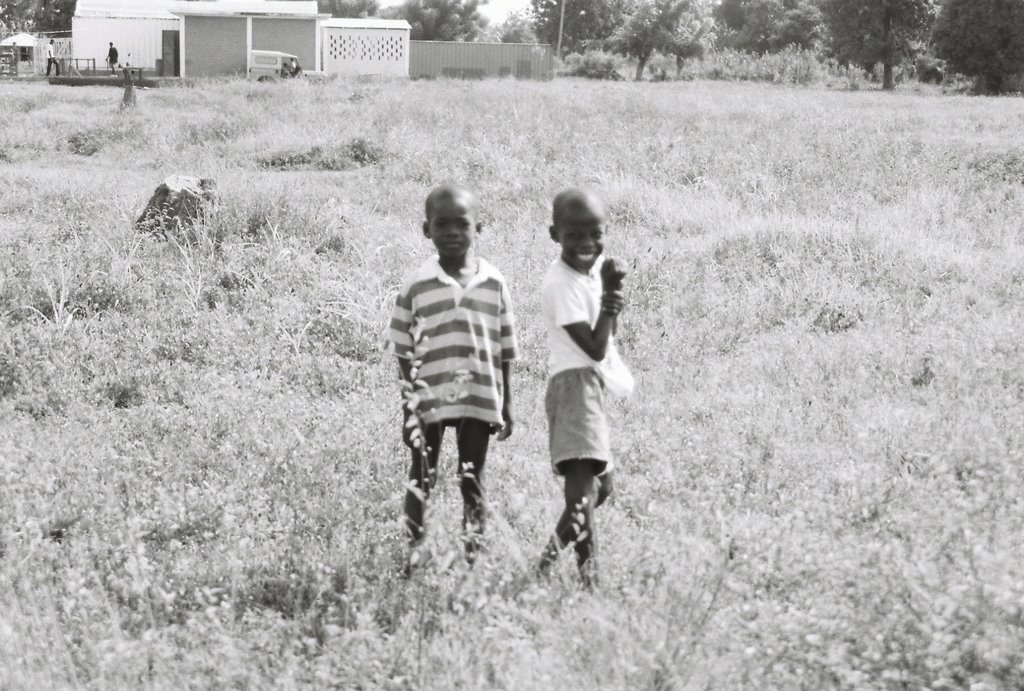
We all piled into the family car and headed out to see our cousins in southern Maryland. I guess I was little over 5-years-old. The side of my family we were visiting - the more Italian-Sicilian side - laughed and talked and ate with a gusto that enthralled my young sensibilities. My jolly older second-cousins smothered me into their ample chests and the more youthful third-cousins sucked me into their whirlwind of energy. After food, the kids decided to troop off into the wooded expanse in the back of the house. An adventure!
Hours must have passed before my mother found me - scooped me up and made a scene about where I'd gone, how long I'd been gone and about how EVERYONE was so scared for us! I looked at her with genuine confusion, and with my hands on my hips retorted, "Mommy, I wasn't lost -- I knew where I was!" Nearly two decades later, I find myself stepping out into an unknown world once again and releasing the grip of a hand that would protect me.
September, 2006: 4-am and the rain was pouring down in sheets - some nasty fringe weather from Hurricane Florence or Gordon. Despite the torrents of water, the airplane departed on time and made its way south to Miami. The connection time between flights was tight - 35 minutes to make the 10-am flight to Port-au-Prince. Walking into the waiting area at gate 17 was like walking into another world - a no-man's-land stuck between East Coast city life and Haiti.
The Haitian travelers around me sat in animated conversation with their neighbors or stared blankly at nothing. Pacing with apprehension, I made a few phone calls to ascertain the whereabouts of my fellow travelers who were to join me on this leg of the journey. As I heard the phrase "we're stuck in North Carolina" coming through the earpiece, my mother's parting words roared in my head, "if anything happens to the others - don't go to Haiti alone, whatever you do."
The portly gate attendant blinked at me when I asked to be moved to a later flight. My bag was on its way to Port-au-Prince and I either went with it at 10-am or not at all. Gulp. Ok.
The plane made it safely to the tarmac in Haiti's capitol city. Customs was a breeze. Theodore, the rickety old porter, guided me directly to Jean Gary, a very friendly and well fed taxi driver. Jean Gary took me to a "safe" place I could wait for the others - a gas station restaurant with an armed juvenile "standing guard." The place bustled with Haitians - light and dark, young and old - Dominican and Cuban workers, and UN peacekeeping troops. For over an hour I wrote in my journal and consumed Goya cookies and bottled water - resisting the temptation to call home and explain that I was, in fact, "alone" in Haiti.
My fellow visitors did not make it that day. The first leg of my journey continued without them - but to say I did it alone would be incorrect. With the help of many kind Haitians, I made it to the other airport, booked a flight to Les Cayes and arrived safely there that evening. By night-fall, I had joined Fr. Marc, some volunteers and Pwoje Espwa employees for a feast and a glass of good 5-star rum. I texted my dad that I had made it safely - within a few days I confessed I had made it "alone." Within a few more days, with my guts in a knot, I confessed my adamant intent to return as a volunteer and live at Vilaj Espwa.
Independence, though something all parents must cultivate and nurture in their children, must be a terrifying thing to watch grow. That understood - my job over the next couple months goes beyond fundraising and organizing to move to Haiti. It must be apparent that I take this next step in my life's journey with great consciousness - that my parents realize what I understand: I know where I am.
Subscribe to:
Posts (Atom)