 Bay of Cayes near Ile-a-Vache, Haiti. 2007
Showing posts with label children. Show all posts
Showing posts with label children. Show all posts
Monday, February 15, 2010


Wednesday, October 21, 2009
suggestions for a lively October 25 (thinking ahead):
Find a chocolate festival. Preferably in Europe (you know, if you're there). Walk around. See the sights. Maybe sample some chocolate.
Perugia, Italy. Chocolate Festival. October, 2008.
 One of the charming things about Italy is that each little town has a unique personality. Everyday practices, from what sort of food people eat to more seasonal customs, such as when festivals blow through town or the details of religious processions, find their roots deep in history. Witnessing these in a smaller community opens a different country than many visitors encounter when experience "Rome," (though this, undeniably, is Italy too).

 One of the charming things about Italy is that each little town has a unique personality. Everyday practices, from what sort of food people eat to more seasonal customs, such as when festivals blow through town or the details of religious processions, find their roots deep in history. Witnessing these in a smaller community opens a different country than many visitors encounter when experience "Rome," (though this, undeniably, is Italy too).
Monday, October 19, 2009
Haitian girl learning to walk
Haitian girl. Ile-a-Vache, Haiti, 2007
 Reality in one of the poorest corners of Haiti: if you are born with a physical disability your parents likely won't be able to care for you. Abandoned by her parents, this little girl is in the loving care of a nun (Sr. Flora) who runs an orphanage for the severely disabled. One day she may be able to walk on her own.
My reasoning to post this photograph now was quite purposeful. One of the most frequent Google searches that drives people to my blog is evidently, "Haitian girls." I don't know the motivation behind these searches but I lived long enough in Haiti not to ask. Still, one can hope, the searches are well intentioned.
Saturday, October 17, 2009
Francesa, sea breeze child
Bald Head Island, North Carolina, 2007
 It's been pouring and unseasonably cold in DC for the last few days. This photograph is like a breath of fresh, warm air. I need one! So I thought I'd share it with you too.
Thursday, August 09, 2007
stripping away belying smiles
Despite their tragic histories and less than ideal lives, the Espwa kids smile regularly and "fe desod" (act out) on a daily basis. In fact, catching any one of them in a pensive or sullen moment is rather difficult. Perhaps that goes to show how our screen-less and packed homes, three starchy meals a day and boundless, muddy farmland compare to the alternative, which is nothing - less than nothing - or death from starvation.  Yesterday, Paige and I went out to try to "capture" some of the kids looking gloomy. We literally had to bribe them with candy -- and even still, we caught far too many smiles! But man, without a cheerful, toothy grin to hide the sorrow, their eyes reveal naked tragedy. They possess memories that no one deserves, let alone kids their age.
  This little boy (below) did not need any coaxing, however. It would be hard to exaggerate the harsh reality of going through life with one foot -- especially in a place where prosthetic limbs are only a fantasy.
 Yesterday, Paige and I went out to try to "capture" some of the kids looking gloomy. We literally had to bribe them with candy -- and even still, we caught far too many smiles! But man, without a cheerful, toothy grin to hide the sorrow, their eyes reveal naked tragedy. They possess memories that no one deserves, let alone kids their age.
  This little boy (below) did not need any coaxing, however. It would be hard to exaggerate the harsh reality of going through life with one foot -- especially in a place where prosthetic limbs are only a fantasy.
Saturday, August 04, 2007

Friday, July 27, 2007
the girls of Haiti
 Still hope of a future...
 Saved from starvation...
 At serious risk of teenage pregnancy...
Monday, July 23, 2007

Friday, July 20, 2007
...the darndest things
Blan: Looked they burned out the tree!
Timoun: Ya.
Blan: Think there're evil spirits in that hole?
Timoun: Hmm...
Blan: I think there are. Would you sleep in there?
Timoun: (silence)
Blan: Evil spirits...
Timoun: There aren't any. (pause) I'm not afraid of the devil!
Blan: Oh no?
Timoun: Nope! (kicking the air) I'd fight'em.
Blan: (looks at kid)
Timoun: Ya! (still shadow boxing) And 'sides, they burned that tree out to kill the evil spirits. So there aren't any any more. They're gone now.
Timoun: Ya.
Blan: Think there're evil spirits in that hole?
Timoun: Hmm...
Blan: I think there are. Would you sleep in there?
Timoun: (silence)
Blan: Evil spirits...

Timoun: There aren't any. (pause) I'm not afraid of the devil!
Blan: Oh no?
Timoun: Nope! (kicking the air) I'd fight'em.
Blan: (looks at kid)
Timoun: Ya! (still shadow boxing) And 'sides, they burned that tree out to kill the evil spirits. So there aren't any any more. They're gone now.
Wednesday, July 18, 2007

Tuesday, July 17, 2007
in a glance
The southern region of Haiti is the lushest part of the country. The children at Pwoje Espwa eat 3 meals a day and attend school free of charge. Even the streets of Cayes are not completely filled with the sorts of deformed and crippled beggars and street kids that riddle descriptions of Graham Greene's Haiti (though, admittedly, most of Haiti has not improved since the penning of the Comedians).
Nonetheless, the poverty here disturbs. A visitor to our organization cried at the realities she encountered at Mother Theresa's home in downtown Cayes. She had been expecting Mexico-like conditions and instead encountered dejection, poverty and disease rivaled only in Bangladesh, Sudan, Somalia and the like. And yet, the Cayes area cannot compare to the Artibonite region and Gonaive.
 The Espwa kids come to us from this reality. Though we cannot offer them everything, we can offer thousands of children a hope they might not otherwise know. We often kid about the face that might "make" Espwa's non-existent trust fund -- we want to do more for Haiti's future. So, we talk about the "honest-to-goodness fly-in-the-eye orphan." We know these exist and that this is no joke, but what we really mean to say is that we must capture that reality and bring it to the consciousness of those who might help.
Claudia's eyes may be bug-free and she may have parents (albeit, very poor ones who have trouble staying employed and can hardly even afford a one-room house in which to shelter their extended family of 7) but her eyes still have a look that one does not see in the developed world. Even with a smile on her face, her eyes have a nearly intangible, but certainly real, sad or wise look to them. What gives these children such a curiously deep glance at such a young age? Can they truly process an understanding of the unfair hand life has dealt them before they even reach the fabled age of reason?
Nonetheless, the poverty here disturbs. A visitor to our organization cried at the realities she encountered at Mother Theresa's home in downtown Cayes. She had been expecting Mexico-like conditions and instead encountered dejection, poverty and disease rivaled only in Bangladesh, Sudan, Somalia and the like. And yet, the Cayes area cannot compare to the Artibonite region and Gonaive.
 The Espwa kids come to us from this reality. Though we cannot offer them everything, we can offer thousands of children a hope they might not otherwise know. We often kid about the face that might "make" Espwa's non-existent trust fund -- we want to do more for Haiti's future. So, we talk about the "honest-to-goodness fly-in-the-eye orphan." We know these exist and that this is no joke, but what we really mean to say is that we must capture that reality and bring it to the consciousness of those who might help.
Claudia's eyes may be bug-free and she may have parents (albeit, very poor ones who have trouble staying employed and can hardly even afford a one-room house in which to shelter their extended family of 7) but her eyes still have a look that one does not see in the developed world. Even with a smile on her face, her eyes have a nearly intangible, but certainly real, sad or wise look to them. What gives these children such a curiously deep glance at such a young age? Can they truly process an understanding of the unfair hand life has dealt them before they even reach the fabled age of reason?
Friday, July 13, 2007
bitter-sweet waiting periods
Perhaps some are under the illusion that work in the developing world is fast-paced. I like to refer to my experience working here as "The Great Wait." To give you an idea:
The Cayes-office is dark, there is spotty, slow internet. Charcoal dust and the scents of pig entrails and tripe blow in the window from the neighboring kitchen. Two different sets of computer speakers blast music -- one kompa and the other Celine Dion. Working out at the farm is impossible since the guy who's supposed to set up the internet has said "tomorrow" since last week. A large satellite dish sits on the bottom floor of the quad, secure in its corrugated cardboard, taunting us.
We can't get the Haitian government to recognize our NGO status. An ongoing saga. Every day it's going to happen "tomorrow." This prevents us from participating in round-tables with other organizations in the area. This also prevents funding from major international organizations who would otherwise be able to provide immense help.
Organizing and requesting aid from peripherally located organizations means securing a ride into town, finding a printer that works, printing off the request, driving it half way up a mountain, waiting around, handing over the request, waiting, driving home. This can take up to a whole day, which means that not much else gets done.
EDH (Haiti's national electricity company) hooked up power to our farm. This is awesome except that EDH is highly unreliable... So there are surges and 12-48 hour periods with no electricity at all. Yesterday, since our batteries hadn't been recharged for days, we had no power... We waited and waited and finally were able to get something done on our computers by evening.
Now, the upside to all these "down periods" is that the kids are happy to see us around, hang out with us and harass us. If I let go of my neurotic, American expectations to be on the 'net every day, then I can be very happy out here playing with children and running a backhoe (yes, running a backhoe). Then, too, I recognize the ability to have other kinds of successes.
All these things taken into consideration, it'll be bitter-sweet leaving Haiti behind. Right now I am engaged in a transfer of "power." Paige is meeting my friends around town and learning about some of the projects that I have been working on. She'll pick up the mantel where I leave off in mid-August.
The Cayes-office is dark, there is spotty, slow internet. Charcoal dust and the scents of pig entrails and tripe blow in the window from the neighboring kitchen. Two different sets of computer speakers blast music -- one kompa and the other Celine Dion. Working out at the farm is impossible since the guy who's supposed to set up the internet has said "tomorrow" since last week. A large satellite dish sits on the bottom floor of the quad, secure in its corrugated cardboard, taunting us.
We can't get the Haitian government to recognize our NGO status. An ongoing saga. Every day it's going to happen "tomorrow." This prevents us from participating in round-tables with other organizations in the area. This also prevents funding from major international organizations who would otherwise be able to provide immense help.
Organizing and requesting aid from peripherally located organizations means securing a ride into town, finding a printer that works, printing off the request, driving it half way up a mountain, waiting around, handing over the request, waiting, driving home. This can take up to a whole day, which means that not much else gets done.
EDH (Haiti's national electricity company) hooked up power to our farm. This is awesome except that EDH is highly unreliable... So there are surges and 12-48 hour periods with no electricity at all. Yesterday, since our batteries hadn't been recharged for days, we had no power... We waited and waited and finally were able to get something done on our computers by evening.
Now, the upside to all these "down periods" is that the kids are happy to see us around, hang out with us and harass us. If I let go of my neurotic, American expectations to be on the 'net every day, then I can be very happy out here playing with children and running a backhoe (yes, running a backhoe). Then, too, I recognize the ability to have other kinds of successes.
All these things taken into consideration, it'll be bitter-sweet leaving Haiti behind. Right now I am engaged in a transfer of "power." Paige is meeting my friends around town and learning about some of the projects that I have been working on. She'll pick up the mantel where I leave off in mid-August.

Monday, July 09, 2007


Friday, June 29, 2007
Israel's passing
Israel Valcourt. Died in front of Klinic Espwa at Castel-Pere on June 29, 2007 around 8:40am. He was 16-years-old.
*********** disturbing/graphic content to follow ***********
Paige and I emerge from the quad. It's not quite early morning but not late yet. Today reminds us of yesterday, sunny breezy, pleasant. We're going to meet Fr. Marc to go into town. Not ten steps from the building, a woman streaks by us, wailing, her hands in her hair, elbows akimbo. Then we hear more shrieks -- shrieks that can only mean that someone has died.
As we pass the clinic, we see a quickly growing crowd and in the midst, a white sheet covering what can only be a body. Security is quickly rounding up children and depositing them in the primary school. Fr. Marc is looking on with a solemn face, standing near the covered body. Later, when he comes over to sit with us under the mango tree, where we have self-consciously retreated, we will learn all the details.
One of the upper administrative staff guides Matante back to her home, she is calling out to God. Another staff member steps away and calls our lawyer, the local authorities and a funeral home. The body will not be removed until it is declared officially dead by the proper authorities. This will hopefully happen sooner rather than later, given that we have 400 curious children to worry about.
Finally, Fr. Marc joins our quiet twosome. I ask him what happen. And he replies,
"Israel died. A seventh grader. You knew him... 16 years old..." he trails off. After a moment, he collects his thoughts and delivers the rest of the story, as he's learned it. His parents are dead. His aunt, with whom he lived, said that last night he was very sick, vomiting blood. This morning he came to Pwoje Espwa to pick up his report card from the secondary school. Then, he and his aunt were hoping to get a ride in one of Espwa's vehicles to the hospital, since the boy could barely stand.
So they waited by the clinic. One of the drivers was summoned and he came expeditiously in a truck. Before he even reached the yard in front of the clinic, the boy collapsed, the rest of the contents of his stomach - and maybe even his stomach itself - were pouring from his nose and mouth. He was dead.
In the U.S., Fr. Marc reflects, this bright young kid might not have died. He would have gone to the hospital the night before, maybe sooner. We don't know yet, nor might we ever, why he died exactly. The doctor didn't seem to know. It all seems surreal -- but it's so real. Painfully real.
I watch as Marc calls over one of Israel's classmates.
"Was he your friend?" he asks.
"Yes," the boy answers, his eyes red.
"Was he sick?"
"I don't know..."
Then Marc pauss, thinking. "Did he have siblings?"
"I think so..."
Behind us, more and more villagers from Madame Combe march through our gate to see their deceased neighbor and stand with his family. The lawyer shows up a few minutes later and mercifully, the state official does too.
As we pass the clinic, we see a quickly growing crowd and in the midst, a white sheet covering what can only be a body. Security is quickly rounding up children and depositing them in the primary school. Fr. Marc is looking on with a solemn face, standing near the covered body. Later, when he comes over to sit with us under the mango tree, where we have self-consciously retreated, we will learn all the details.
One of the upper administrative staff guides Matante back to her home, she is calling out to God. Another staff member steps away and calls our lawyer, the local authorities and a funeral home. The body will not be removed until it is declared officially dead by the proper authorities. This will hopefully happen sooner rather than later, given that we have 400 curious children to worry about.
Finally, Fr. Marc joins our quiet twosome. I ask him what happen. And he replies,
"Israel died. A seventh grader. You knew him... 16 years old..." he trails off. After a moment, he collects his thoughts and delivers the rest of the story, as he's learned it. His parents are dead. His aunt, with whom he lived, said that last night he was very sick, vomiting blood. This morning he came to Pwoje Espwa to pick up his report card from the secondary school. Then, he and his aunt were hoping to get a ride in one of Espwa's vehicles to the hospital, since the boy could barely stand.
So they waited by the clinic. One of the drivers was summoned and he came expeditiously in a truck. Before he even reached the yard in front of the clinic, the boy collapsed, the rest of the contents of his stomach - and maybe even his stomach itself - were pouring from his nose and mouth. He was dead.
In the U.S., Fr. Marc reflects, this bright young kid might not have died. He would have gone to the hospital the night before, maybe sooner. We don't know yet, nor might we ever, why he died exactly. The doctor didn't seem to know. It all seems surreal -- but it's so real. Painfully real.
I watch as Marc calls over one of Israel's classmates.
"Was he your friend?" he asks.
"Yes," the boy answers, his eyes red.
"Was he sick?"
"I don't know..."
Then Marc pauss, thinking. "Did he have siblings?"
"I think so..."
Behind us, more and more villagers from Madame Combe march through our gate to see their deceased neighbor and stand with his family. The lawyer shows up a few minutes later and mercifully, the state official does too.
**************
Please keep Israel, his family and his friends in your prayers.
Wednesday, June 20, 2007
strange beach creatures
A storm brews around the shores of North Carolina's Bald Head Island (satellite image, Google Earth). Along the shore, riddled with rip currents, lie strange and displaced sea creatures.
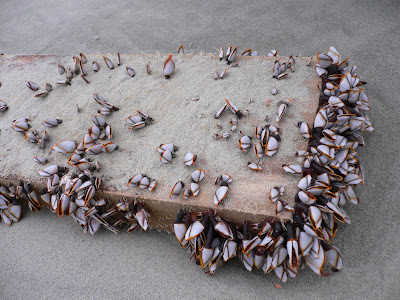

 Along the shore, riddled with rip currents, lie strange and displaced sea creatures.


Friday, June 01, 2007

Monday, May 21, 2007
some changes
 On Thursday I'm heading home for a few weeks. Gotta go to a graduation and a wedding and see some friends and family. I'll be back here by mid-June though!
A volunteer and good friend, Nico, took off for a new job this afternoon. A diocese in Connecticut runs a mission house in Port-au-Prince. Nick landed the position of running this house and overseeing the mission's various projects throughout the city.
 The kids put on a show in his honor. Some of them sang a song they composed about how they will miss him and see him again one day. The talent show (called a spektak here) was the finest I've see yet. There was a comedy skit -- teenagers dressed up and acting like loud, angry old men. And there was a "remix" of Michael Jackson's "Thriller." Not too shabby.
 Nick lived in Cayes for two and a half years. He's "moving on" now but he's not moving far. We hope to and expect to see him from time to time -- because the bonds created here last a life time and, well, we'll miss him.
Thursday, May 17, 2007

Subscribe to:
Posts (Atom)